

How AI chatbots improve website conversion rates
Many websites attract visitors every day, but only a small portion of them actually take meaningful actions like filling out a form, buying a product, or booking a service. One major reason behind this gap is the lack of instant guidance when users land on a page. People often leave when they cannot quickly find what they are looking for or when their questions go unanswered. AI chatbots help solve this issue by acting as real-time digital assistants that respond, guide, and engage visitors the moment they arrive. They reduce confusion, provide clarity, and keep users actively involved, which naturally increases the chances of conversion across different types of websites, from e-commerce to service-based platforms.
1. Instant responses keep visitors engaged
One of the main benefits of AI chatbots is their ability to reply instantly. Visitors no longer need to wait for email replies or search through multiple pages for answers. When a user asks about pricing, availability, or features, the chatbot can respond within seconds. This quick interaction reduces drop-offs because users stay engaged instead of leaving the site out of frustration. In many cases, faster answers directly influence purchase decisions since users feel more confident when they get clarity without delay.
2. Guiding users through the website journey
A large percentage of website visitors do not know exactly what they are looking for when they arrive. AI chatbots help by guiding them step-by-step based on their intent. For example, on an e-commerce website, a chatbot can ask simple questions like budget, preference, or category, and then suggest suitable products. On a service website, it can direct users toward relevant pages or booking forms. This reduces confusion and shortens the path from landing to conversion, making the user journey more structured and purposeful.
3. Better lead qualification in real time
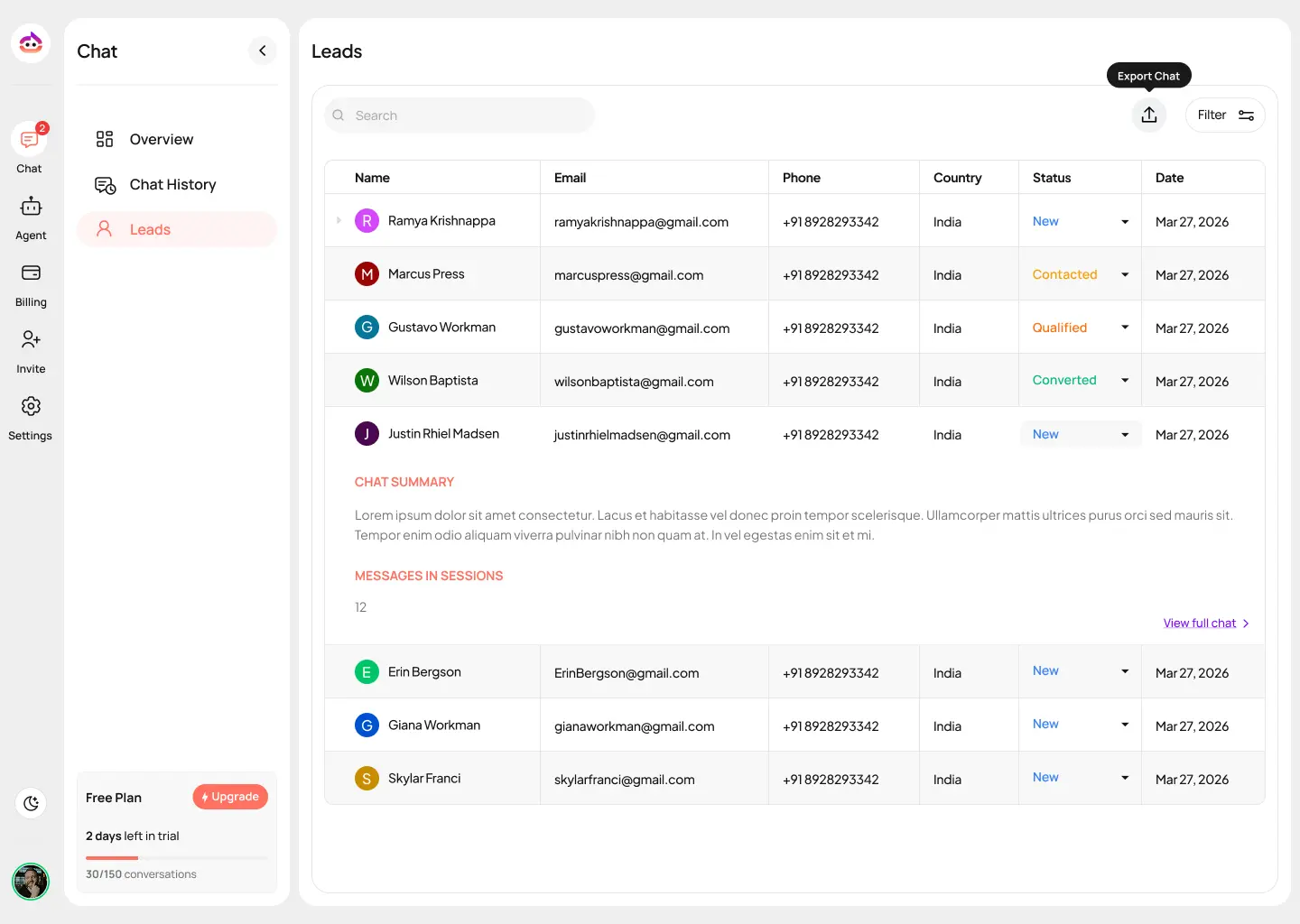
Not every visitor is ready to buy, but many are still potential leads. AI chatbots help filter and qualify these users by asking relevant questions during the conversation. Instead of sending every inquiry to a sales team, the chatbot can collect important details like budget, requirements, or timeline. This helps businesses focus only on high-intent leads, saving time and improving efficiency. Qualified leads also tend to convert better because they are already filtered based on interest and readiness.
4. Reducing bounce rates with active engagement
High bounce rates often indicate that users are not finding what they need quickly enough. Chatbots reduce this issue by actively engaging visitors instead of leaving them alone on a page. Even a simple greeting like “Need help finding something?” can encourage users to interact. Once the conversation starts, the chatbot can guide them deeper into the website. This ongoing interaction keeps visitors on the site longer, which increases the chances of them taking meaningful action.
5. Personalized product and service recommendations
AI chatbots can analyze user input and offer personalized suggestions based on behavior and preferences. This is especially useful in e-commerce, travel, and service-based websites. Instead of showing generic listings, the chatbot narrows down options based on what the user actually needs. This reduces decision fatigue and helps users find relevant solutions faster. Personalization also builds trust since users feel that the platform understands their requirements more clearly.
6. Supporting users during checkout or form completion
A common reason for abandoned carts or incomplete forms is confusion during the final steps. Chatbots can step in at this point and help users complete the process. They answer last-minute questions about shipping, payment options, or service details. They can also remind users about incomplete actions in a helpful way rather than a pushy one. This support during critical moments plays a major role in improving conversion rates, especially for online stores and booking platforms.
7. Collecting user data for better optimization
AI chatbots do more than just talk to users. They also collect useful insights from conversations. Businesses can analyze these interactions to understand common questions, user behavior, and friction points on the website. This data helps in improving website structure, content, and marketing strategies. Over time, these improvements contribute to higher conversions because the website becomes more aligned with user expectations.
8. Availability that matches user expectations
Visitors do not always arrive during business hours. AI chatbots work continuously, providing support even when human teams are offline. This constant availability ensures that no lead is lost due to timing issues. Users can get answers, submit queries, or even book services at any time, which increases overall conversion opportunities.
Real-world use cases across industries
AI chatbots are now used across different industries to improve conversions in practical ways.
E-commerce: Chatbots suggest products, answer queries, and assist checkout, helping reduce cart abandonment and increase purchases. Real estate: They qualify buyers by collecting requirements and help schedule property visits, improving lead quality and response speed. Healthcare: Chatbots gather basic symptoms, provide initial guidance, and support quick appointment booking with doctors. SaaS companies: Chatbots explain features, guide users through plans, and help them choose the right subscription based on their needs.
Where chatbots should be placed on a website
Placement plays a big role in how effective a chatbot becomes.
Homepage: to greet and guide new visitors Product or service pages: to answer decision-related questions Pricing page: Chatbots explain plans, compare options, and reduce confusion while users choose the right package Exit-intent triggers: to recover users about to leave
Common mistakes that reduce conversions
Not all chatbot setups perform well. Some common mistakes reduce their impact.
Overloading users with messages at the start: Chatbots often lose effectiveness when they push too many messages immediately after a user lands on the website, which can interrupt the browsing flow and reduce engagement. Poor training leading to irrelevant responses: When a chatbot is not trained properly on business data, it may provide inaccurate or unrelated answers, which reduces user trust and lowers conversion chances. Asking too many questions too early: Collecting excessive information in the initial interaction can feel overwhelming for users, causing them to abandon the conversation before meaningful engagement begins. Not offering human support when needed: When users face complex queries, and there is no option to connect with a human agent, it can create frustration and negatively impact the overall experience.
Conclusion
AI chatbots have become an important part of improving how websites turn visitors into customers. They provide quick responses, guide users through their journey, and support them during key decision points. When combined with personalization, smart placement, and proper use cases, they reduce friction and improve engagement across the website. They also offer valuable insights that help businesses refine their approach over time. Platforms like Witzo make it easier for businesses to build intelligent chat assistants that support sales, capture leads, and improve overall conversion performance without adding complexity to daily operations.